At Naper Settlement, November Belongs to the Village That Naperville Kept
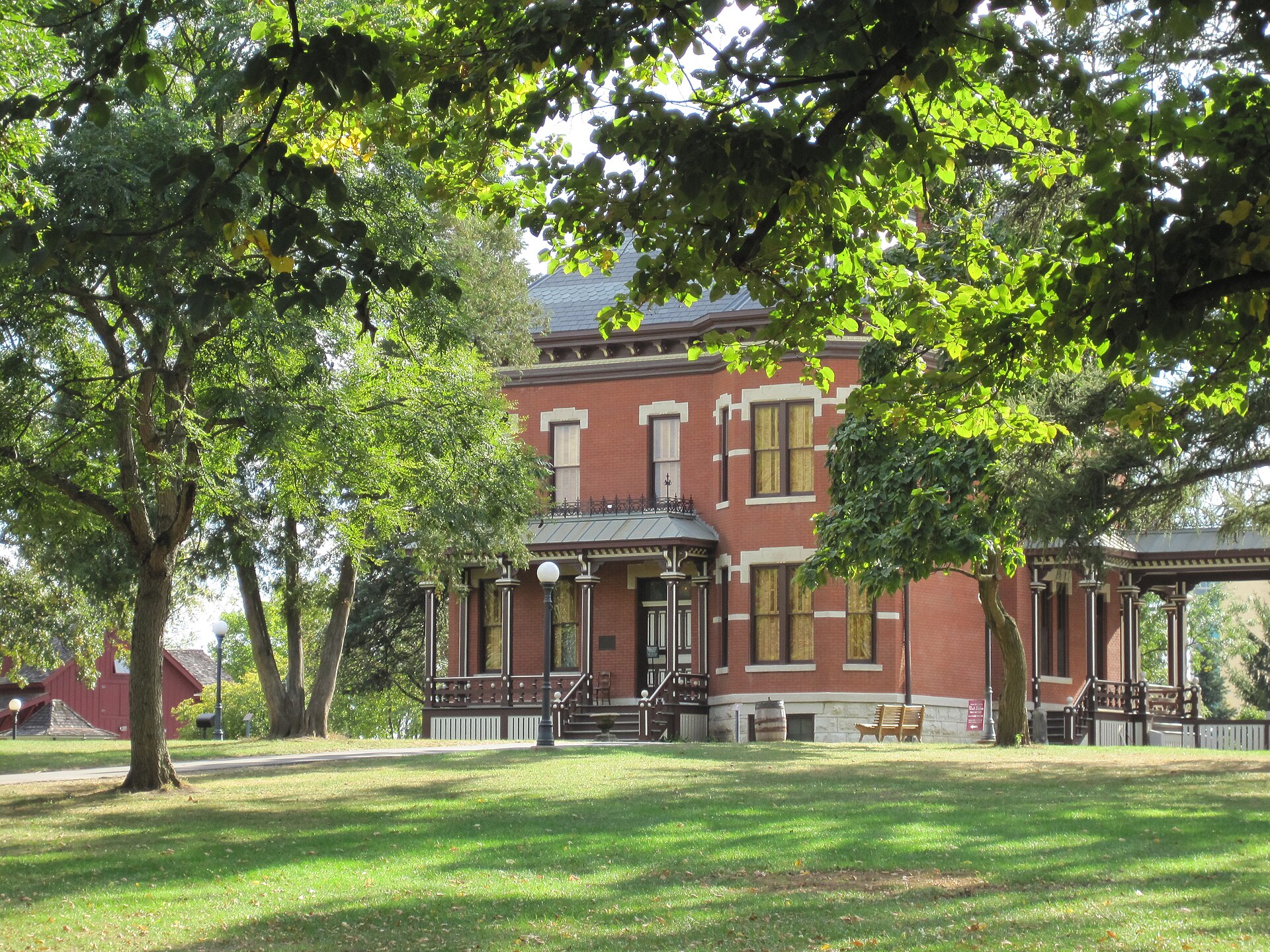
The 12-acre living-history museum on Aurora Avenue preserves some 30 historic buildings, anchored by the 1883 Martin Mitchell Mansion.
On 12 acres at 523 S. Webster Street, Naperville keeps its own past in working order. Naper Settlement, established in 1969, is an outdoor history museum of some 30 historic buildings and structures gathered from around the city — log cabins, a blacksmith shop, a schoolhouse, a chapel and farm buildings that together recreate the Naperville of the nineteenth century.
The centerpiece is the Martin Mitchell Mansion, known to its builders as Pine Craig. George Martin II, who made his fortune in Naperville tile and brick, built the house in 1883 with materials from local businesses and stone from DuPage River quarries. It was added to the National Register of Historic Places in 1975 and restored at the turn of this century.
The museum exists because of the family that lived in that house. Caroline Martin Mitchell bequeathed the land to the City of Naperville in 1936, and her gift eventually became the ground on which the Settlement stands — a rare case of a city's history museum sitting on land donated by one of the families whose history it tells.
November is a quieter, moodier month at the Settlement. The school groups thin out, the grass goes dormant, and the village takes on the look of a frontier town bracing for winter — which is, of course, exactly the season its original residents prepared for each year, splitting wood and banking houses against the cold.
For a city that has grown into one of Illinois' largest, Naper Settlement is the counterweight: proof, maintained in timber and limestone a short walk from the Riverwalk, that Naperville began as a prairie settlement at a river crossing and chose to keep the evidence.